Crossing the age of 40 often brings subtle but noticeable changes in the body. Energy levels fluctuate more easily, muscle recovery takes longer, and endurance may not feel as effortless as it once did. However, aging does not mean slowing down permanently. With the right movement practices, it is absolutely possible to maintain and even improve stamina, strength, and overall vitality after 40.
Yoga is one of the most effective and joint-friendly ways to build endurance in midlife and beyond. Unlike high-impact workouts, yoga strengthens muscles, improves lung capacity, enhances circulation, and trains the nervous system to sustain effort calmly. When practiced consistently, energizing yoga poses help the body work efficiently, allowing you to stay active longer without exhaustion.
Below are five powerful yet safe yoga poses that are especially beneficial for enhancing endurance after 40. These poses focus on large muscle groups, core stability, breath control, and mental resilience—all essential components of lasting stamina.
Why Endurance Training Changes After 40
After 40, muscle mass naturally declines if not actively maintained, and cardiovascular efficiency can decrease with inactivity. Recovery time also increases, making aggressive workouts harder to sustain. This is where yoga becomes particularly valuable.
Yoga builds endurance through isometric strength, controlled breathing, and sustained muscle engagement rather than explosive movement. It teaches the body how to hold effort without strain and how to breathe through challenge—skills that directly translate into better stamina for walking, climbing stairs, exercising, and daily tasks.
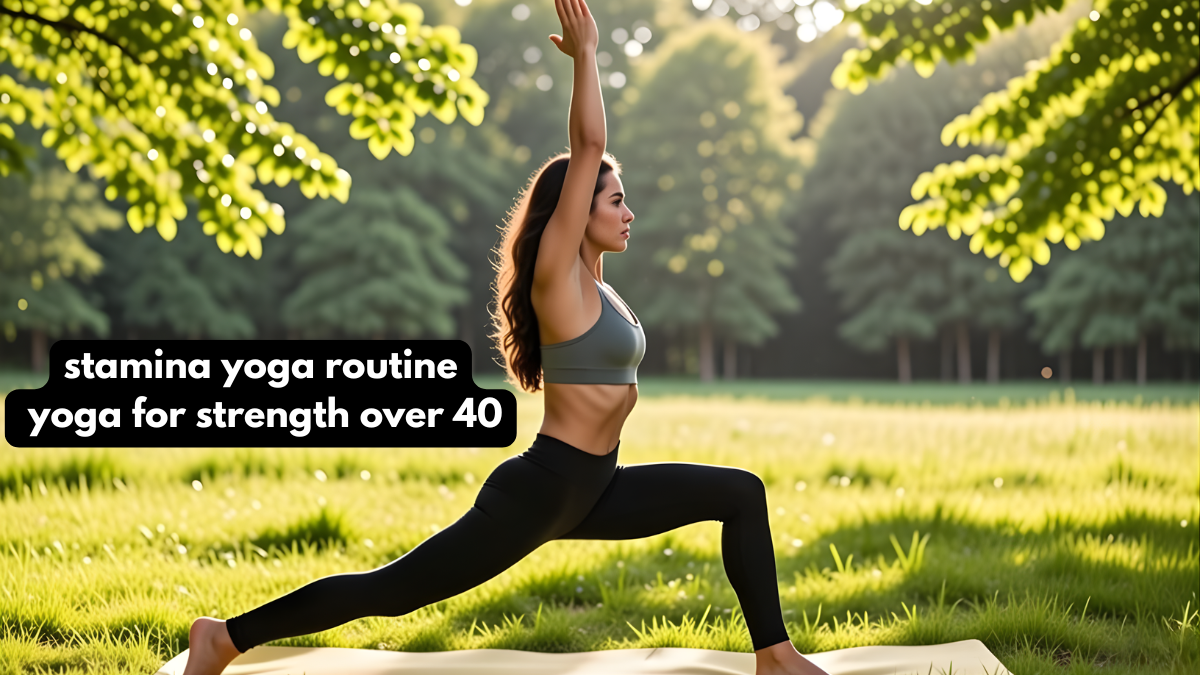
Warrior II Pose Builds Lower-Body Endurance
Warrior II is one of the best standing poses for developing endurance after 40. It engages the thighs, hips, glutes, shoulders, and core simultaneously, training the body to remain strong and steady under tension.
Holding Warrior II for several breaths builds muscular endurance in the legs, which is crucial for mobility and balance as we age. The pose also encourages deep, rhythmic breathing, improving oxygen delivery to working muscles.
With regular practice, Warrior II helps reduce leg fatigue, strengthens joints, and improves posture—key factors for sustained physical activity later in life.
Plank Pose Strengthens the Core for Energy Efficiency
Endurance is not just about leg strength or lung capacity. A strong core allows the body to move efficiently, reducing unnecessary energy loss. Plank Pose is one of the most effective poses for building full-body endurance through core stability.
In Plank Pose, the abdominal muscles, lower back, shoulders, glutes, and legs all work together to support the spine. This coordinated engagement trains the body to maintain strength over time without collapsing or overcompensating.
For adults over 40, Plank Pose helps protect the lower back, improves posture, and builds the kind of endurance that supports all other physical activities.
Boat Pose Develops Core Stamina and Mental Focus
Boat Pose is a powerful posture that challenges both physical and mental endurance. By lifting the legs and torso while balancing on the sit bones, the deep abdominal muscles and hip flexors are strongly engaged.

Holding Boat Pose for multiple breaths builds sustained core strength, which is essential for balance, stability, and long-lasting energy. It also trains mental focus, as the mind must stay calm and steady while the body works.
This combination of physical effort and controlled breathing makes Boat Pose especially effective for improving endurance after 40.
Downward-Facing Dog Recharges Energy and Improves Circulation
Downward-Facing Dog is often seen as a resting pose, but it plays a critical role in endurance-building yoga routines. This pose gently strengthens the arms, shoulders, and legs while stretching the spine and improving circulation.
Because the heart is positioned above the head, blood flow is enhanced, helping to refresh the body and reduce fatigue. This makes Downward Dog an excellent pose for sustaining energy during longer yoga sessions.
For adults over 40, this pose helps relieve stiffness, improves breathing efficiency, and supports recovery between more demanding poses.
Chair Pose Builds Strength and Cardiovascular Endurance
Chair Pose is deceptively simple but extremely effective for building endurance. It strongly engages the quadriceps, glutes, calves, and core while also increasing heart rate when held for longer durations.

Holding Chair Pose teaches the body how to remain strong during discomfort without panic or collapse. This is a key aspect of endurance—learning to stay steady and breathe through challenge.
Practicing Chair Pose regularly helps improve leg strength, balance, and cardiovascular resilience, all of which contribute to better stamina after 40.
How These Poses Work Together to Boost Endurance
When combined, these five yoga poses create a balanced endurance-training system. Standing poses like Warrior II and Chair Pose strengthen large muscle groups and improve circulation. Core poses like Plank and Boat enhance stability and energy efficiency. Downward-Facing Dog supports recovery and sustained effort.
Together, they train the body to hold effort calmly, breathe deeply under pressure, and recover without exhaustion. This holistic approach makes yoga uniquely effective for endurance development in midlife.
Breathing: The Hidden Key to Stamina After 40
One of yoga’s greatest benefits is its focus on breath. Controlled breathing improves oxygen uptake, reduces stress hormones, and helps muscles work longer without fatigue.
During each pose, slow and steady breathing signals the nervous system to remain calm. This reduces energy drain and allows the body to sustain effort more efficiently. Over time, this breathing awareness carries into daily life, improving overall stamina.

How Often to Practice for Best Results
For endurance benefits, practicing these poses three to five times per week is ideal. Each pose can be held for 20 to 60 seconds initially, gradually increasing duration as strength improves.
Consistency matters more than intensity. Even short, regular sessions can lead to noticeable improvements in energy levels, balance, and physical confidence within a few weeks.
Safety Tips for Yoga After 40
Always warm up before holding energizing poses. Listen to your body and avoid pushing into pain. Modifications, such as using blocks or reducing hold time, are signs of intelligence—not weakness.
If you have existing joint issues or medical conditions, it’s wise to practice under guidance or consult a professional before beginning a new routine.
Conclusion
Enhancing endurance after 40 is not about pushing harder—it’s about training smarter. These five energizing yoga poses offer a safe, effective way to build stamina, strength, and resilience without unnecessary strain. By strengthening the legs, core, and breath together, yoga helps restore energy, improve mobility, and support an active lifestyle well into later years. With regular practice, endurance becomes not something you lose with age, but something you consciously rebuild.
Disclaimer: This article is for general wellness and educational purposes only. Individuals with health conditions or injuries should consult a qualified professional before starting or modifying any exercise routine.