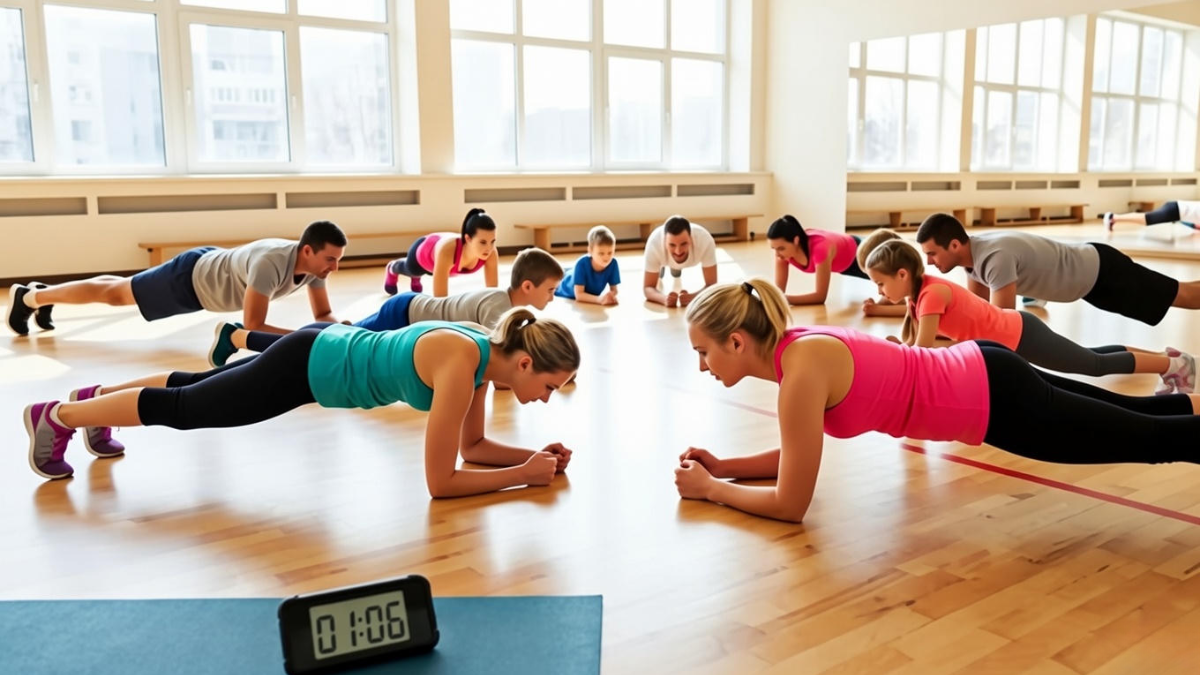
The plank is often called the ultimate core exercise, and for good reason. It looks simple, requires no equipment, and can be done anywhere. Yet many people struggle with one key question: how long should you actually hold a plank to see real results? Some believe longer is always better, while others quit too early and miss the benefits.
In reality, plank timing is not about chasing extreme hold records. It’s about holding the right duration with perfect form, based on your age, fitness level, and goals. This guide explains plank hold timing in a clear, practical way so you can build a stronger, safer, and more functional core at any stage of life.
Why Plank Timing Matters for Core Strength
Planks are an isometric exercise, meaning your muscles work without moving. During a plank, your abs, lower back, hips, glutes, shoulders, and even legs work together to keep your body stable. This builds endurance, spinal support, and core control.
However, holding a plank too long with poor form can reduce benefits and increase strain on the lower back and shoulders. That’s why quality always beats duration. A well-executed 30-second plank is more effective than a shaky 2-minute hold.
The Biggest Plank Mistake Most People Make
The most common mistake is treating plank time like a competition. People push far beyond their form limit, allowing hips to sag, backs to arch, or shoulders to collapse inward.
Once form breaks, the core stops working properly and stress shifts to joints. This not only slows progress but can also lead to pain or injury. The goal is not to hold as long as possible, but to hold as long as you can with clean alignment.

Beginner Plank Hold Timing: Build the Foundation
If you’re new to planks or returning after a break, start small. The core muscles need time to adapt.
For beginners, 10 to 30 seconds per set is ideal. During this time, focus on creating a straight line from head to heels, squeezing the glutes, bracing the abs, and breathing steadily.
Instead of one long hold, beginners benefit more from multiple short sets, such as three 20-second planks with rest in between. As strength improves, gradually add 5 to 10 seconds per week.
Intermediate Plank Timing: The Sweet Spot for Results
For most people, the best results happen in the 30 to 90 second range. This window is long enough to challenge the core deeply but short enough to maintain excellent form.
If you can hold a plank for 60 seconds without shaking, sagging, or holding your breath, your core endurance is solid. This level supports better posture, reduced back pain, and improved performance in daily activities and workouts.
Many fitness professionals consider a clean 60-second plank a stronger indicator of core health than extremely long holds.

Advanced Plank Timing: When to Stop Chasing the Clock
Advanced exercisers may hold planks for 90 seconds to 2 minutes with good form. Beyond this point, benefits from simply increasing time start to diminish.
Instead of pushing for longer holds, advanced users should focus on plank variations that increase difficulty without overloading joints. This challenges the core more effectively than adding time alone.
How Plank Timing Changes With Age
Age does not disqualify you from building a strong core, but recovery and joint health become more important.
Younger adults often aim for 60 to 120 seconds with good form. In the 40s, a consistent 45 to 60 second plank is an excellent benchmark. In the 50s and beyond, 30 to 60 seconds held with control provides powerful benefits.
Even holding a plank for 20 to 30 seconds later in life significantly improves balance, stability, and posture. The key is consistency, not comparison.
Why Shorter Planks Can Be More Effective
Research and coaching experience show that multiple short, high-quality planks activate the core more effectively than one long hold with fatigue.

For example, three 40-second planks with rest often build more usable strength than one 2-minute plank. Shorter holds allow you to maintain tension, breathing, and alignment throughout the set.
This approach also reduces strain on the lower back and shoulders, making planks safer for long-term practice.
How to Progress Plank Holds Safely
Progression should be slow and intentional. Once your current plank time feels stable, add time gradually. If form degrades, stop and reset.
A simple progression strategy is to increase total plank time per session rather than single hold duration. For example, move from two 30-second planks to three 30-second planks before increasing to 40 seconds.
When you can hold a plank for 60 to 90 seconds comfortably, progression should come from difficulty, not duration.
Best Plank Variations Instead of Longer Holds
Once basic planks feel easy, variations help you continue improving without excessive strain.
Side planks strengthen the obliques and improve lateral stability. High planks challenge the shoulders and arms more. Plank shoulder taps or leg lifts increase anti-rotation strength and balance.
These variations activate deeper core muscles and provide better real-world strength than simply holding longer.
Breathing: The Hidden Key to Longer, Safer Planks
Many people unknowingly hold their breath during planks. This increases tension and causes early fatigue.
Slow, controlled breathing keeps the nervous system calm and helps the core muscles stay engaged longer. If you cannot breathe steadily, it’s a sign your plank hold has gone past its effective limit.
How Often You Should Practice Planks
Planks can be performed 3 to 5 times per week, depending on recovery and overall training. Because they are low-impact, they fit well into most routines.
Even short daily planks of 30 to 60 seconds can create noticeable improvements in posture, strength, and stability within a few weeks.

Conclusion
Plank hold timing is not about extremes. The strongest core gains come from holding planks for the right amount of time with perfect form. Beginners should start with 10 to 30 seconds, intermediates thrive in the 30 to 90 second range, and advanced exercisers benefit more from variations than longer holds. At any age, consistent, well-executed planks build a resilient core that supports better movement, posture, and long-term strength.
Disclaimer: This article is for general fitness information only. If you have injuries, back pain, or medical conditions, consult a qualified professional before starting or progressing plank exercises.